Have been told you have a good voice? Or do you find the world of voiceover fascinating and fancy giving it a go as a side hustle, hobby or even your main job?
We work with voiceover artists every week for our video productions and our in-house voiceover artist Sarah Griffin, has been a professional voiceover for nearly 10 years, so we can give you a great overview of what you need to know.
Firstly, you need to know that the voiceover industry is busy, crowded and competitive. It’s a very popular way to supplement a main income or to provide a handsome single income and most of the work can be done from home, and often working flexible hours. So you can see why it’s popular!
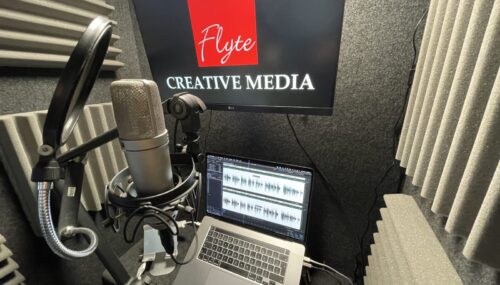
Secondly, voiceover work requires both an investment of your time, in training and practising, but also a monetary investment in equipment. You must be prepared to learn your craft, whether you pay for professional coaching or decide to teach yourself, and spend many hours practising before you even begin to audition for work. You must also be prepared to invest in a microphone, audio interface and sound treatment in your chosen recording area (at the least!).
If you do feel ready to commit both your time and some money into this avenue, then it can be massively rewarding, both financially and creatively, so don’t give up!
We would recommend spending some time researching how (and where) you might set up your recording space. You’ll need somewhere big enough for your equipment and quiet enough that you can work uninterrupted. A spare room, study or even walk-in wardrobe are good places to get set-up.
YouTube is a fantastic resource with endless information available about voiceover, to help you get set up. Voices.com’s YouTube channel has lots of short videos about starting out, covering pretty much everything you need to know initially.
Once you’ve got yourself set-up with a good recording space and the necessary equipment, you’ll need to learn some audio editing, in order to capture what you’re recording.
Mike Russell’s YouTube channel features great tutorials on audio editing.
Joining a few ‘pay-to-play’ websites will probably be your next step, as most voiceover artists join these websites in order to find work. There are different levels of membership, with some offering a free membership to begin.
In Sarah’s Voiceover Diaries blog, she shares tips on how to find work, plus the best and worst websites to use when scouting for work, so have a read and take a look at the websites.
Have a watch of this vlog by Sarah too, sharing a typical day in the life of a voiceover artist:
We hope this has given you a good overview of what you need to know about the world of voiceover and how to get started.
Our FLYTE voiceover roster is open to professional voiceover artists to join, so please drop us a line when you’re ready to join! sarah@flytecreativemedia.co.uk